
Customer Profiling Deep Dive
A step-by-step guide to navigating and interpreting the Customer Profiling feature in Rove - illustrated with Rove Solis™ Territory: 🇺🇸 United States | Category: Jewellery
Stage 1
Overview and Score
When you open your product in Rove and navigate to Customer Profiling, the first thing you'll see is a summary and a score. The score tells you how strong the market is and what the opportunity for entry looks like at a glance.
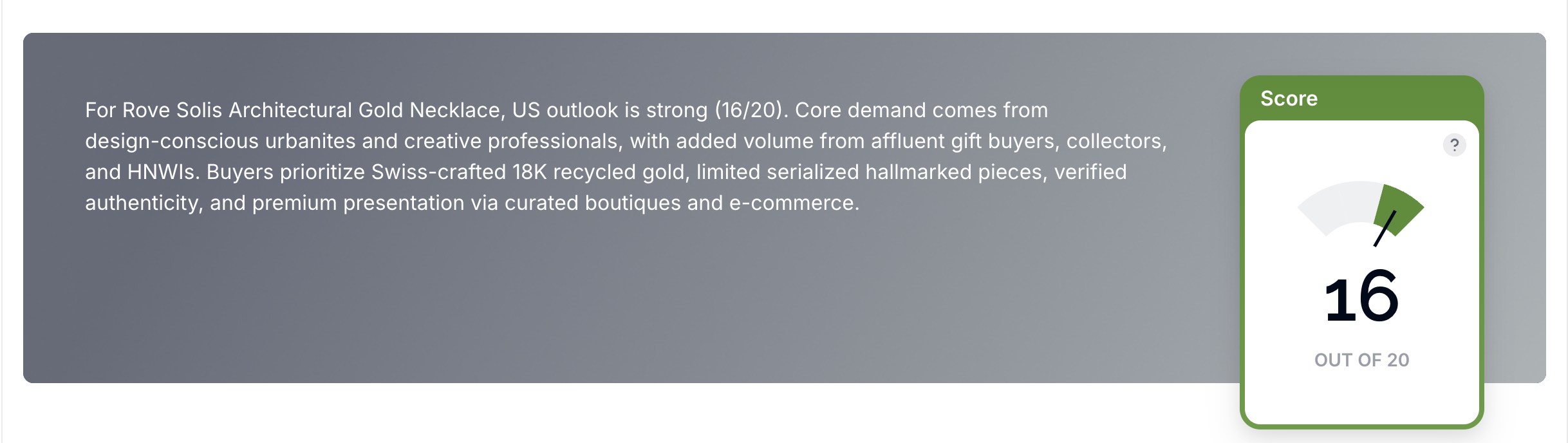
💡 Tip: Always read the summary first. It frames everything that follows and gives you the headline picture at a glance.
Stage 2
The Five Customer Profiles
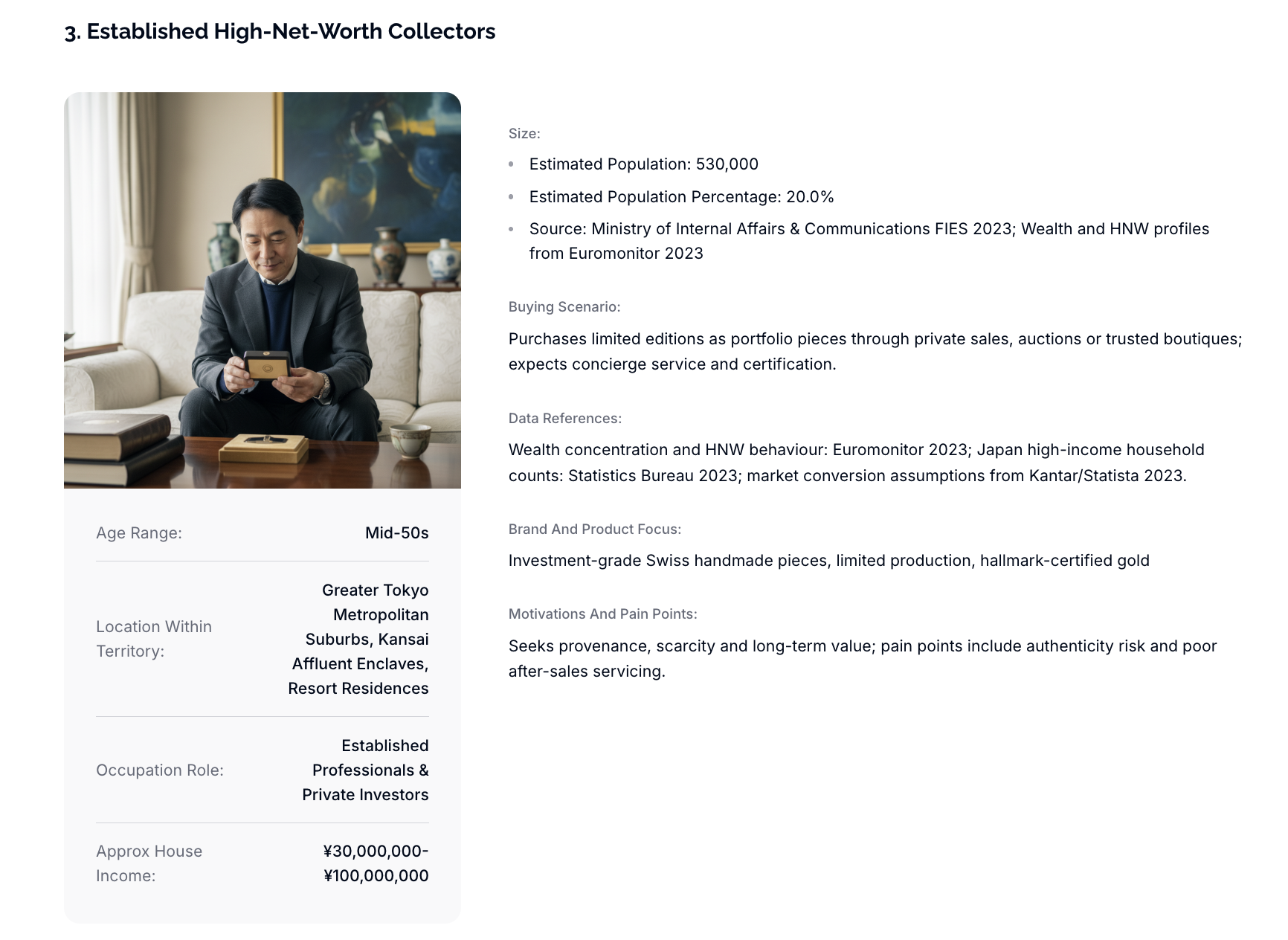
Rove identifies five distinct customer profiles for your product in the selected territory. Each profile is laid out in a consistent format so you can compare them directly.
Customer Profiling moves beyond broad audience categories. Rather than simply identifying "luxury buyers," Rove drills down into the specific segments most relevant to your product.

Each profile includes:
- An Estimated Population (the size of the opportunity for that customer segment)
- A Buying Scenario (when and why this profile is likely to purchase, including times of year, specific motivations and channel preference)
- Brand and Product focus, which drills down into the specifics of what appeals
- Age Range indicates the life stage your customer sits within, helping contextualise their likely motivations, purchasing power, needs, and behavioural patterns.
- An Approximate Household Income and Occupation or role to give you the demographic context to sharpen your targeting.
- The underlying Motivations driving purchase behaviour and the key Pain Points or unmet needs that create friction, enables clearer targeting, positioning, and product-market fit decisions.
Stage 3
Sentiment Analysis
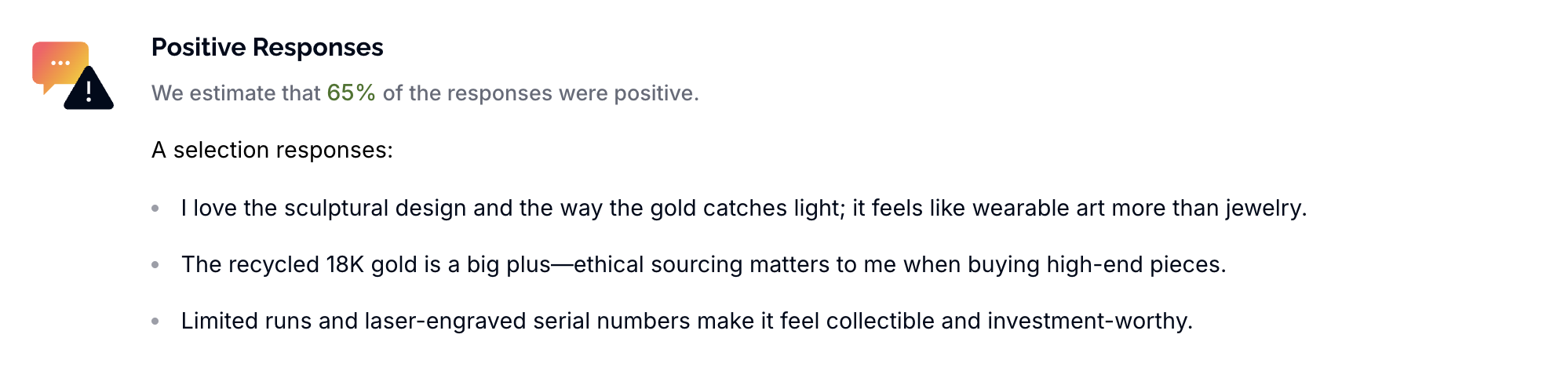
Below the five profiles, Rove provides a sentiment analysis for your product in the territory. This measures actual brand and product perception - not assumption - by generating synthetic customer responses to your product proposition.
Responses are grouped into three categories.
Positive responses reinforce your marketing and targeting angles.
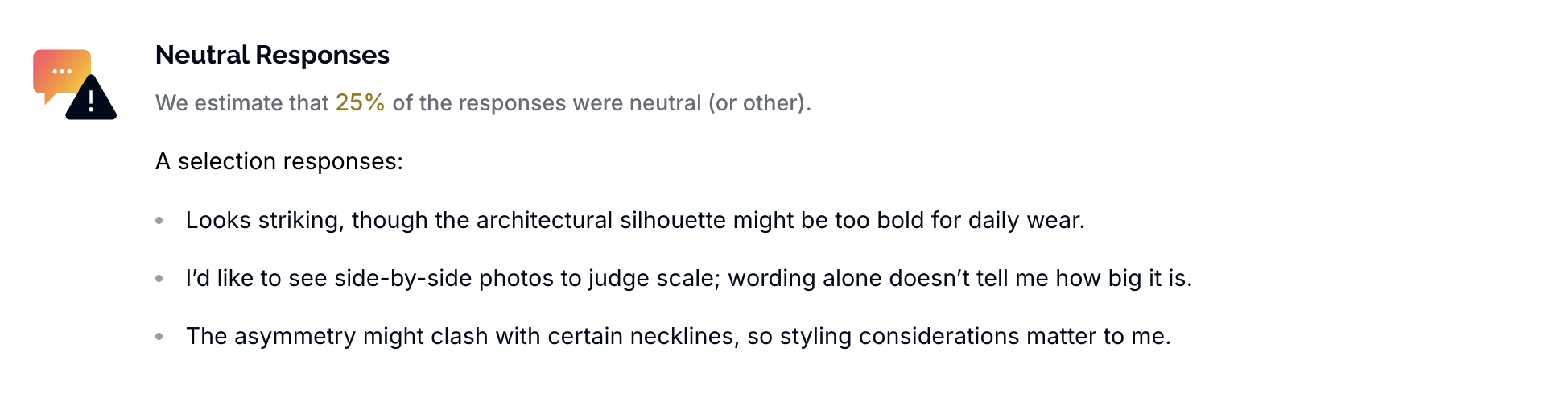
Neutral responses are those that could potentially be shifted to positive with the right messaging or visual presentation.
Negative responses are objections you'll need to anticipate and address in your customer communications.
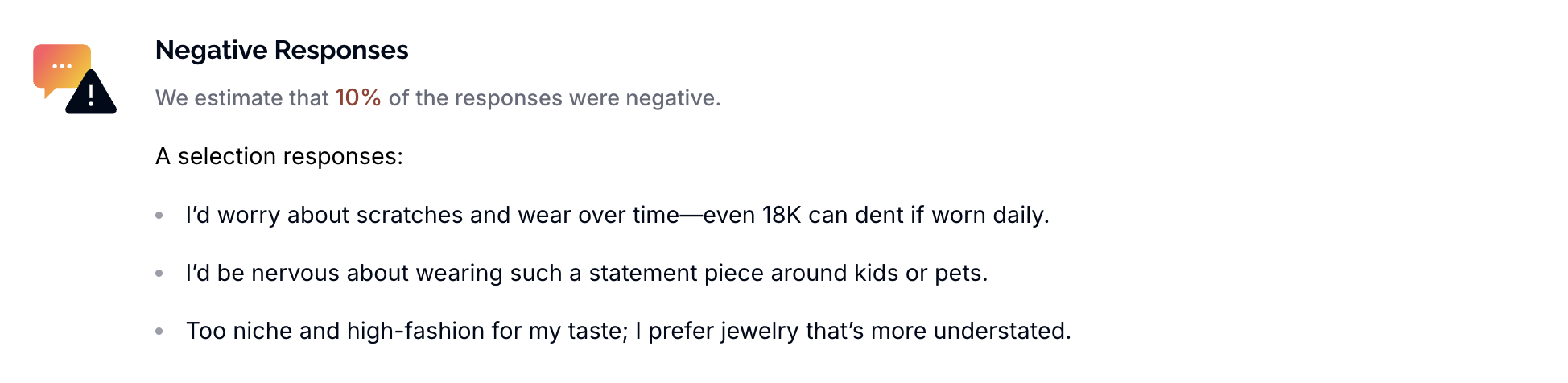
💡 Example: A neutral response such as "I'd like a side-by-side photo to judge scale" might inform how you present your product in e-commerce imagery - turning a hesitation into a conversion opportunity.
Stage 7
Word Cloud and Frequency Analysis
At the bottom of the Customer Profiling page, Rove surfaces the most frequently mentioned words from the synthetic customer responses, along with how often each appears.
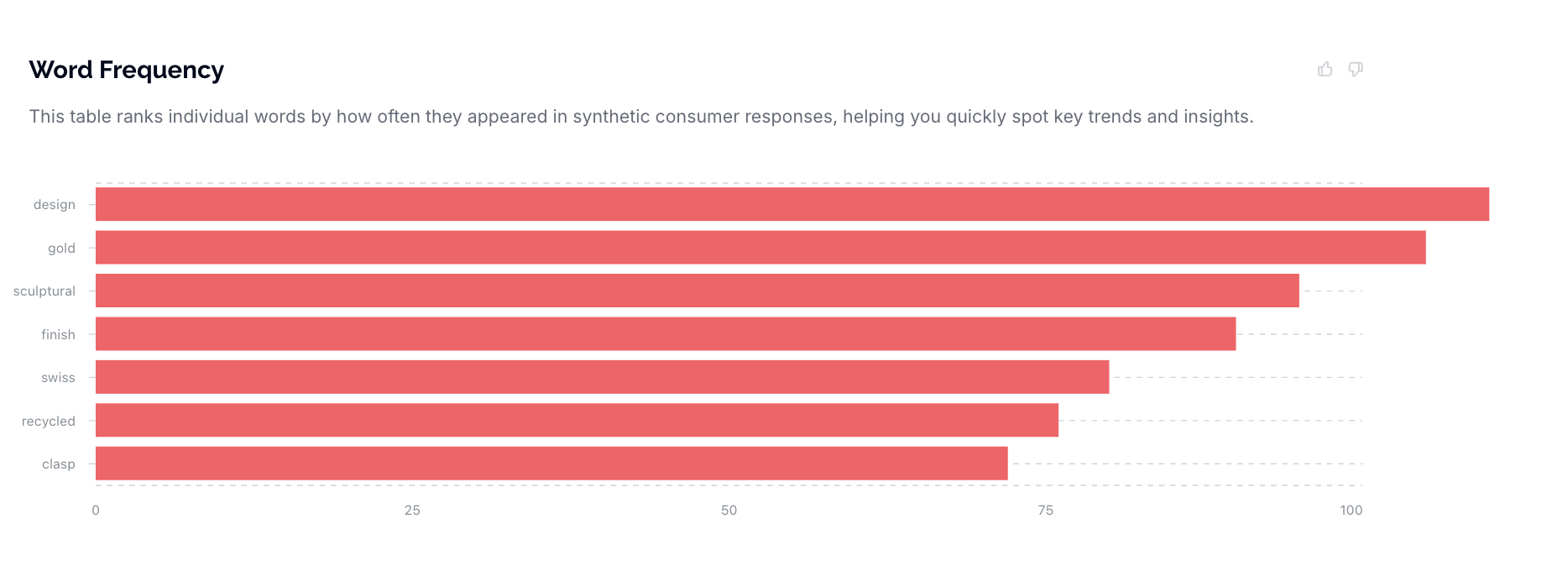
This tells you which product attributes are front of mind for your customer profiles - and may surprise you. For the Rove Solis, while the product is marketed as Swiss Made, the words ranking highest are design and gold - indicating where your positioning emphasis should sit when communicating to these specific profiles in this territory.
💡 Why this matters: Word frequency data gives you a direct steer on how to position your product in market — grounded in what your target customers actually respond to, not just your brand's existing messaging.